Best Shader for Minecraft: Guide and Download
Discover the best shader packages for Minecraft such as BSL, AstraLex and Complementary. Complete guide to improve graphics, lighting and performance.
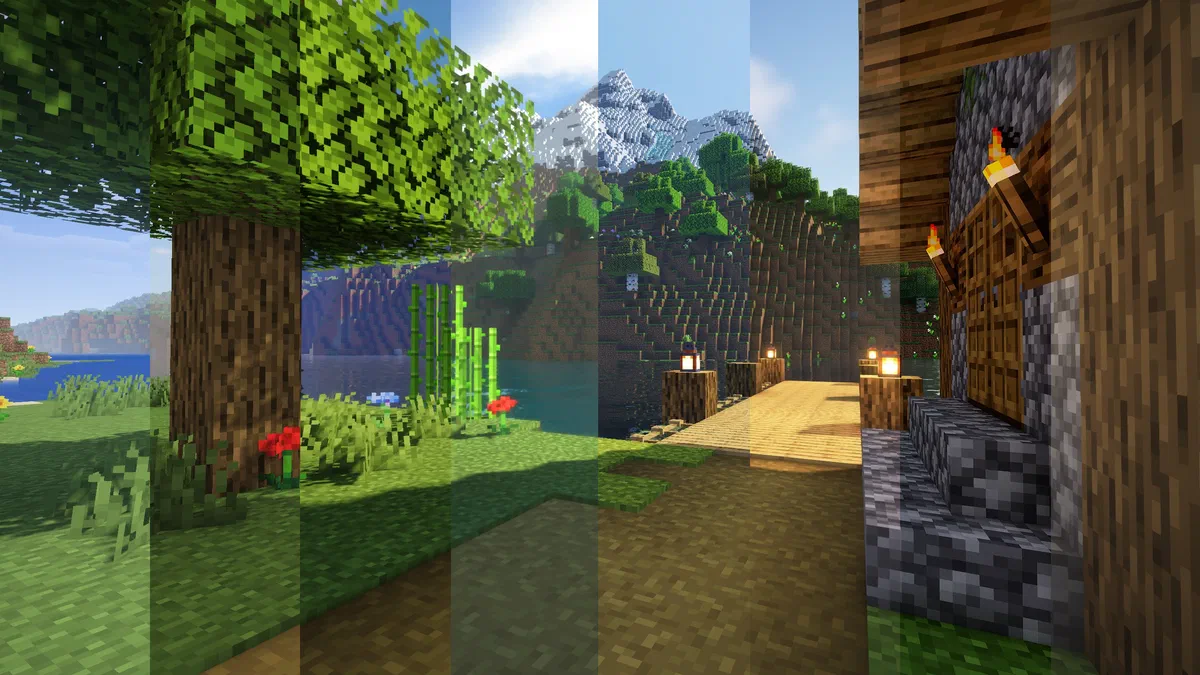
Minecraft has always possessed a unique charm, but the classic 8x8 pixel textures become really spectacular when combined with dynamic real-time lighting, shadows traced through ray-tracing and volumetric fog offered by a high quality shader package. The graphic changes for Minecraft have existed for many years, and each package offers unique features to transform the game worlds into real breathtaking artworks.
Currently, the offer of shader packages is wider than ever, and download and installation procedures have been greatly simplified. The real difficulty lies in choosing which shader to use since, unlike texture packages, you cannot overlay multiple mods to combine their visual effects. Some focus on realistic lighting, others on water physics or weather effects. There are light options for optimization and mastodontic packages that require high-end gaming PCs to express maximum potential.
AstraLex Shaders #
AstraLex Shaders is a relatively recent package, born as a derivation of the famous BSL Shaders. What strikes from the first use is the impressive amount of customization options, which allows you to adjust every visual detail: from specific tones of lighting to various post-processing filters. One of the most appreciated features is the particular cinematographic effect of black bands that appears when the character moves, a detail that quickly became the trademark of this mod.
Already with the default settings, AstraLex offers an extraordinary graphic compartment. Every environmental element is sharp and vibrant, while the sky is spectacular, especially during night hours. It should be noted that the particular constellations of stylized stars may not meet the tastes of all players, but remain a very original aesthetic addition.


Beyond Belief Shaders #
The Beyond Belief Shaders package does not distort classic aesthetics compared to other options in this list, but it stands out for a particularly realistic and fascinating water yield. This mod offers players an excellent balance between performance optimization, level of customization and general visual impact.
Historically based on the SEUS v11 code, a predecessor of modern ray-tracing packages, Beyond Belief shares a high basic quality. It also adds unique settings, such as a sophisticated night desaturation effect, perfect to admire the pyrotechnic shows within the game, and a light but suggestive cel-shading filter for a more comic look.


BSL Shaders #
BSL Shaders represent visual excellence for many players. It is the package that the community tends to return to classic games in survival mode or multiplayer servers. The BSL are among the world’s most downloaded graphics on official platforms such as CurseForge. Each element, from perfect depth of field to warm lighting, to crystalline reflections on water and volumetric clouds, is made sublimely.
Thanks to an extremely versatile configuration menu, the BSL Shaders ensure excellent scalability on different hardware configurations, although they tend to give the best on medium-high-end PCs. Despite today’s competition for the title of best shader both agguerritissima, BSL undoubtedly remains one of the main points of reference in the panorama of the graphic modding of Minecraft.


Chocapic13’s Shaders #
We are in front of a real classic: the name Chocapic13’s Shaders is known even to the least advantageous players in the world of mods. This historical package remains one of the most solid alternatives available, thanks to a lively artistic direction but not invasive and, above all, a lightness that guarantees excellent performance on a wide range of hardware configurations.
Although it is not designed to limit the latest generation PCs with ultra-realistic effects, Chocapic13’s manages to infuse a serene and relaxing atmosphere, rare to find in other packages. The combination of the sweet animation of the foliage, the delicate glitter of the waves and a soft lighting creates an incredibly immersive exploration environment.


Complementary Shaders #
Complementary Shaders are born as an evolution of the BSL, with the stated goal of offering players the most stable and configuration-free experience. This package has exceptional compatibility with most mods, combined with high-level performance. If combined with modern loaders such as Iris Shaders, it guarantees a granite framerate, making it the ideal choice to better value its buildings and large architectural projects in play.
This shader can be optionally matched to the Complementary Resource Pack, although it integrates perfectly with any texture chosen by the user. The visual output also exalts the vanilla blocks of the base game, and the night atmospheres are among the most evocative of the whole modding panorama.


Frequently Asked Questions (FAQ) About Minecraft Shaders #
What are the shaders in Minecraft and what are they for? #
Shadingrs are advanced graphic changes that radically transform the visual appearance of Minecraft. They intervene on the rendering engine of the game to add realistic effects not present in the base version, such as dynamic lighting, accurate shadows, reflections on water, volumetric fog and realistic movement of the wind-mounted vegetation.
What are the requirements to install shaders on Minecraft? #
To use shader packages you need the Java Edition version of Minecraft for PC. Since the game does not natively support these heavy graphic changes, it is essential to first install a loader for performance and graphics, such as OptiFine or the most modern combination of Iris Shaders and Sodium.
Does shaders cause lag or reduce FPS in play? #
Yes, the processing of complex visual effects requires considerable computing power from the video card (GPU). However, there are more “light” shader packages, such as Chocapic13’s Shaders or “Lite” versions of many other packages, which are specifically optimized to keep the game smooth even on medium-low-end computers.