Nintendo Portal Console: History and Best Models
Discover the story of Nintendo's portable consoles: from the legendary Game Boy to the innovative Switch. Relive the evolution of gaming on the go.
On this page
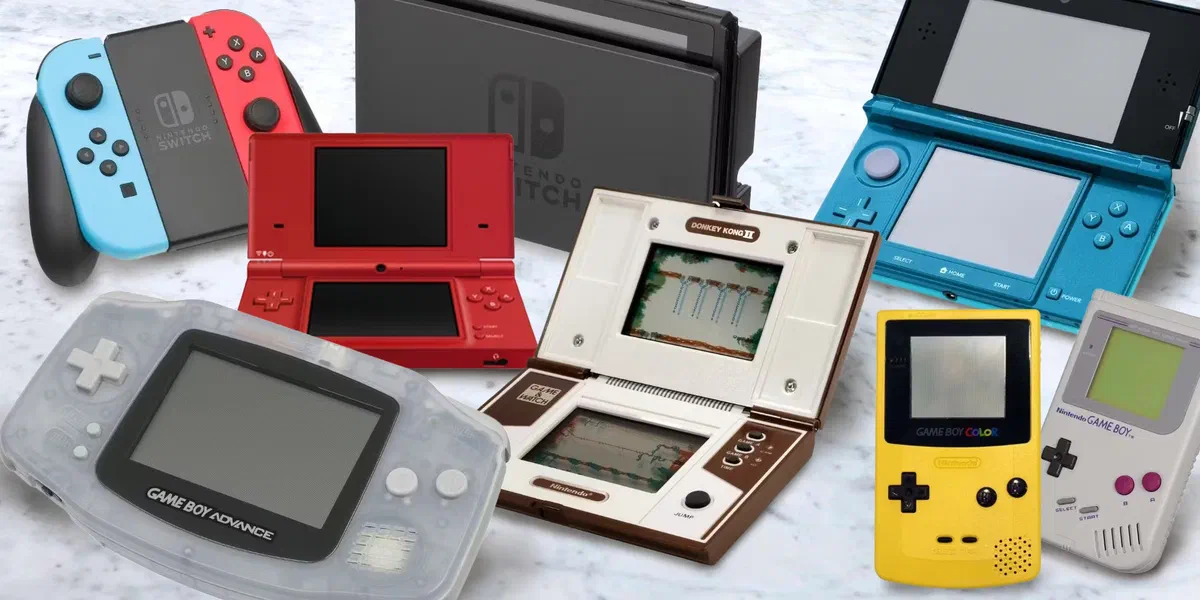
In the video game scene, no one has ever managed to match the incredible success of Nintendo portable consoles. Although technological giants such as Sony, Sega and Atari have tried to insidize their primacy in the past, no one has the same longevity and the huge global attraction of the Kyoto company. While addressing some challenges in the mobile market over the decades, Nintendo has enjoyed overwhelming success: its devices are still among the most sold consoles of all time. Nintendo’s portable heritage is immense and demonstrates a constant priority to the innovation of mobile gaming.
With the arrival on the Nintendo Switch market and the explosion of smartphones, many analysts felt that a solely pocket console no longer had room. If on the one hand the industry has often focused on high-performance seating machines, the triumph of the Nintendo hybrid system shows that the market for gaming on the go is still extremely vital. Fans around the world eagerly await the future hardware moves of the Japanese giant. After Wii U’s complex parenthesis, most of the public is convinced that the road to the future can pass from a Switch 2 or similar architecture, but only time will confirm the company’s strategies.
Today Nintendo remains one of the unparalleled pillars of the video game industry. Despite direct competitors such as PlayStation and Xbox push the technical limits of hardware to new performance peaks, the Nintendo approach focuses firmly on gameplay, creativity and pure fun. The excellent quality of Exclusive Nintendo largely compensates for the absence of extreme graphics, confirming that a memorable gaming experience does not require photorealistic graphics to excel.
Game and Watch #

Although the historic Game & Watch series does not fall within the classical definition of interchangeable cartridge consoles, it represents the genesis of portable video games. The titles were reproduced on segmented LCD displays with pre-printed graphic overlaps, a concept of genius and pioneering base that recalls in some ways the technology used by the famous Tamagotchi.
The production of the Game & Watch line began in 1980, even anticipating the release of the legendary Nintendo Entertainment System (NES). Nintendo continued to produce and innovate these devices until 1991, the same year that debuted on the international market the beloved Super Nintendo.
The first games of the series introduced Mr. Game & Watch, an iconic character now become a fixed presence in Super Smash Bros. In later models, pocket versions of world resonance brands were released, allowing players to experience miniature adventures with legendary characters such as Link of The Legend of Zelda and Mario of Super Mario Bros.
Game Boy #

Originally launched in 1989, the legendary Game Boy was the first real Nintendo portable console based on interchangeable cartridges. Although part of the library consisted of readapted ports of the NES or the Super Nintendo, the real strength of the system was the incredible amount of exclusive titles developed specifically to exploit its unique features.
This platform holds the record for greater generational longevity among Nintendo machines, dominating undisputed for 9 years before giving way to Game Boy Color. Throughout its life cycle, the system has enjoyed sophisticated hardware revisions such as the Game Boy Pocket, which has streamlined and lightened the size of the shell, and the Game Boy Light, an exclusive edition for Japan that introduced a very useful screen lighting.
Game Boy Color #

The Game Boy Color, which arrived on the shelves in 1998, is often perceived as a direct extension of the original console; however, this revision has integrated a much higher processing power and, above all, a color display, paving the way to graphically more complex and satisfying experiences.
Since its launch, the Game Boy Color has distinguished itself for its iconic polychromatic shells, available in memorable shades such as lime green, grapes purple and the famous Atomic Purple transparent. The console has boasted a vast ecosystem of exclusive titles: its cartridges were ingeniously shaped with a convex curve to prevent accidental insertion into classic Game Boys, thus avoiding potential damage to hardware.
Nintendo Switch OLED #

While being a huge commercial success platform, the community had long felt the need for an update for the Nintendo Switch. Strong of a remarkable longevity on the market, the expectation for a significant performance jump, commonly speculated as “Switch Pro” or Switch 2, was tangible among fans.
Nintendo’s response came true in the Nintendo Switch Model OLED, an aesthetically premium version of the console with a vibrant 7-inch OLED screen, intense colors and a high contrast. Although the upgrade has kept the original processor intact, construction quality, metal adjustable stand and outstanding visual output have convinced players in search of the best gaming experience in portable mode possible.
Nintendo DSi #

The Nintendo DSi has represented an important leap in quality for the DS ecosystem, welcoming both critical and public applause. Despite the resistance of purists with the retrocompatibility of old hardware, the DSi has largely justified the update by introducing two cameras, larger screens, an indispensable SD card slot and the innovative digital store for exclusive DSiWare content.
Although the platform sacrificed the expansion slot and compatibility with Game Boy Advance titles, the advantages in terms of ergonomics and multimedia were undeniable. Although at an absolute historical level is obscured by the original DS titanic numbers, the DSi marked a fundamental transition to integration of apps and digital services on Nintendo devices.
Nintendo DSi XL #

The natural evolution of DSi architecture has quickly led to the concept of further hardware iteration designed to maximize visual comfort. To satisfy an ever-wider demographic, Nintendo launched a “oversize” variant that maximized the fantastic software library available.
The Nintendo DSi XL has clearly shown that, in the display field, “the greater is better”. The adoption of 4.2-inch screens guaranteed an excellent viewing angle, largely justifying the extra weight and footprint of the console. Any enthusiast can confirm that the timeless classics of the Nintendo DS have greatly benefited from this immersive visual restyling.
Nintendo 2DS #

Following the huge success of the 3DS, essential for the corporate budget during the overwhelmed Wii U era, Nintendo strategically decided to consolidate its dominant position in the portable sector. This required the idea of a diverse range of consoles suitable for any budget, leading to the creation of the unique Nintendo 2DS.
Considering that a significant part of the user (especially the younger ones) rarely used the stereoscopic 3D function, the company has made a brilliant marketing move: to release an economic and extremely durable variant, without shell closure and 3D, but totally compatible with the same title park. This strategy has further expanded the market, ensuring anyone access to the great Nintendo adventures.
Game Boy Advance #

Affectably renamed by the community as the “Super Nintendo Portable”, the Game Boy Advance (2001) boasted a powerful 32-bit processor capable of developing sprites and scenarios that rivaled, and often surpassed, the glorious 16-bit era productions of the great N.
Following the solid corporate tradition, the Game Boy Advance also benefited from several structural revisions. Among these are the Game Boy Advance SP, which introduced the indispensable backlit screen enclosed in an elegant folding design, and the iconic Game Boy Micro, an ultra-compact engineering miracle (although without retrocompatibility with the classic Game Boy and Color cartridges).
Nintendo 3DS #

The Nintendo 3DS, debuted in 2011, faced a very turbulent launch period. Complicated an excessive initial price for the general public and a line-up of software not particularly brilliant, sales struggled to take off. Fortunately, a providential price cut, combined with the prestigious “Program Loyalty” (which offered free downloadable titles to the first buyers), saved the console. With the arrival of exclusive masterpieces, the 3DS has become an unstoppable mass phenomenon.
The great breaking element of the Nintendo 3DS was the ability to display images in deep stereoscopic 3D without the help of goggles, flanked by pioneering functions of Augmented Reality (AR). The system evolved into the 3DS XL, consolidating itself in the hearts of fans well beyond the mere 3D visual effect, confirming itself as a ludic platform of very high thickness.
New Nintendo 3DS #

Being Nintendo’s main financial salvation in a delicate period, it was physiological that the 3DS was constantly supported and refined. To maintain high commercial attractiveness and push hardware to new standards, the company has redesigned the platform by presenting a device capable of faster loading and significantly higher performance.
The result was the New Nintendo 3DS: a device enriched by a new secondary analog stick (C-Stick), additional back buttons, enhanced RAM memory and a much faster processor. The most appreciated revolution, however, was the implementation of facial tracking (Super-Stable 3D), which finally made the three-dimensional effect fluid and enjoyable by any visual angle.
Game Boy Advance SP #

The Game Boy Advance SP is one of the most important milestones in the history of Nintendo hardware, able to brilliantly solve the main criticalities of the basic model. The integration of a front-lit screen (and later backlit) eliminated the nightmare of having to desperately seek the perfect light to play, finally allowing fluid sessions even in total darkness.
The revolutionary shell design (clamshell) made the console incredibly pocketable and protected by scratches, placing the aesthetic bases for what would become the DS’s iconic dual-screen. Despite some criticism for the elimination of the standard headphone jack (which required an external adapter), the benefits of the rechargeable lithium battery and ergonomics have consecrated the SP as one of the best handheld ever produced.
Nintendo Switch #

Even if comparing it directly to the classic purely pocket consoles may seem improper, the Nintendo Switch (launched in 2017) is undoubtedly the modern queen of the game on the go. This genial system has cancelled the barriers between the home console and the portable machine: players can start an epic game session on the home television and continue it without interruption during their movements. The ecosystem subsequently expanded with the arrival of Nintendo Switch Lite, a compact, economical variant and exclusively voted for portability.
If in the future Nintendo will decide to return to producing exclusively portable hardware or continue to travel the fortunate way of hybrid systems remains an unknown. What is certain is that the Kyoto company will continue to track the course and evolve the pocket play experience, keeping alive the ingeniousness and interactive entertainment at the highest levels.
Nintendo DS #

Released in 2004, the Nintendo DS was not initially conceived as the direct heir of the Game Boy Advance, but as an experimental “third pillar”; a bold attempt to test new interaction dynamics inspired by the historic double screen of the first Game & Watch.
Against the most prudent expectations, the Nintendo DS has literally dominated the world, positioning itself at the top of the charts like the [best-selling portable console in history](https://it.wikipedia.org/wiki/Console_(videogiochi)#Console pi%C3%B9 soldte). Thanks to the touch screen, the integrated microphone and unforgettable masterpieces, the cultural impact of this machine has been enormous, evolving in the following years in the refined models of DS Lite and DSi.
FAQ - Frequently Asked Questions about Nintendo Portal Consoles #
What is the best-selling Nintendo portable console ever? The portable console that has recorded the largest number of sales in history is the Nintendo DS. Thanks to its double screen, innovative tactile input and an exterminated gaming library, it exceeded 154 million units distributed globally.
What are the advantages of Nintendo Switch OLED compared to the standard model? #
The OLED model offers a larger 7-inch display that guarantees deep blacks and extremely vivid colors. In addition to visual improvements, it has a larger and more stable rear stand for table mode, an optimized audio compartment and a charging base equipped with wired LAN port for a smoother online game.
Can I still play the original Game Boy titles on the new consoles? #
Absolutely. By registering for the Nintendo Switch Online subscription service, you can access a constantly updated catalog dedicated to retro-consoles, so you can relive the great classics of Game Boy, Game Boy Color and Game Boy Advance directly on Nintendo Switch.