


The digital age is constantly changing, and with it the panorama of search engines. Although Google maintains a dominant position, it is essential to explore the available alternatives and understand the dynamics of the industry, especially with the increasing integration of artificial intelligence. This analysis examines the main actors in the world of search engines and their distinctive features.
La Riscoperta del Panorama dei Motori Ricerca: Over Google in 2025
In the current context, where artificial intelligence is redefining online interactions, the search engine industry is more dynamic than ever. ♪ Google continues to hold a preponderant market share, the emergence of new technologies and the growing attention to privacy push users and companies to consider valid alternatives. Understanding this diverse ecosystem is crucial to maximize online visibility and adapt to future search scenarios.
The Meet Giant: Google
Google remains the most used search engine globally. Its success is historically attributed to the ability to provide highly relevant results and a personalized user experience.
However, Google’s business model has evolved, placing an increasing emphasis on monetization. Search Engine Results Pages (SERP) are now dominated by paid features such as ads, Knowledge Graph and snippet, reducing the visibility of organic results. This trend, combined with the massive collection of user data for customization, raises privacy questions. Recent legal actions in the United States, which accuse Google of monopolistic practices, highlight the increasing pressure on this model.
Integration of Google Gemini, the new AI-based research experience and powered by the Gemini AI model, represents Google’s response to the rise of conversational platforms such as ChatGPT. This move aims to provide more intuitive and dialogue-based interactions, offering more accurate and contextually appropriate answers directly in the search interface.
Main Alternatives to Google
While Google continues to innovate, different platforms compete for a market share, each with its own peculiarities.
Microsoft Bing is placed in second place with a global market share of 3.98% in December 2024. It integrated GPT technology into its search engine and offers features such as Bing Chatbot and DALL‘E for an AI-based generation experience. Although its growth has been modest, Bing stands out for visually appealing presentation and advanced SERP features, especially for local research, images and videos. Its algorithmic priorities tend to enhance the quality of content compared to the amount of links.
Yahoo! Search, with a market share of 1.29% to December 2024, is being relaunched. After years of decline, the announcement of a significant renewal from 2024, with the integration of IA and sophisticated features, indicates a strategic attempt to reaffirm itself. Currently powered by Bing, its evolution will be closely linked to the development of Microsoft's IA technologies.
Yandex, the dominant research engine in Russia, holds a share of 69.79% in December 2023 in its country, and 2.55% globally in December 2024. Despite the geopolitical context, Yandex maintains a strong position, especially in Russian online advertising. The recent intention to sell its main Russian activities indicates a global expansion strategy.
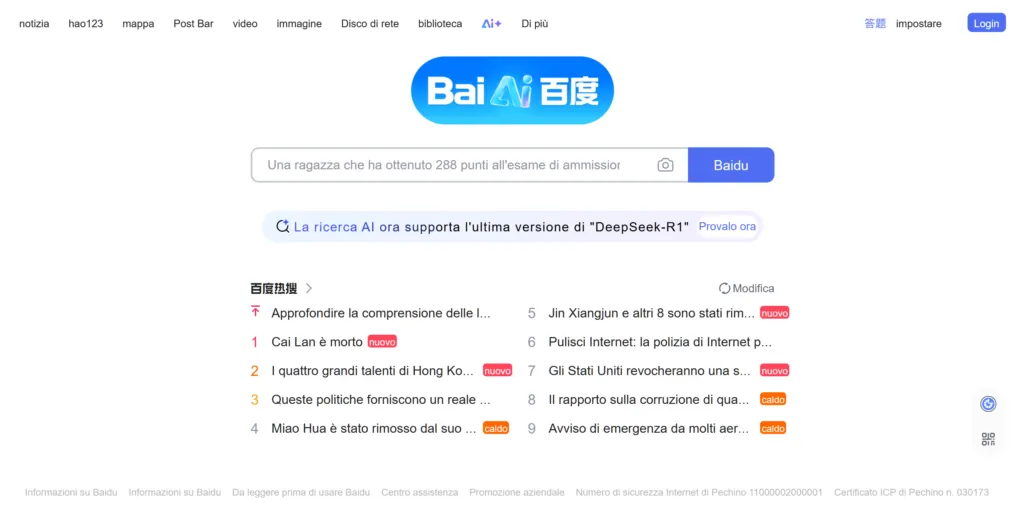
Baidu, founded in China, holds 60.87% of the Chinese market (at December 2024 the global share is 0.81%), operating in a context of government bans for Google services. Similar to Google for functionality and approach, Baidu has monetized its space through ads since 2004 and is investing in IA and voice research.
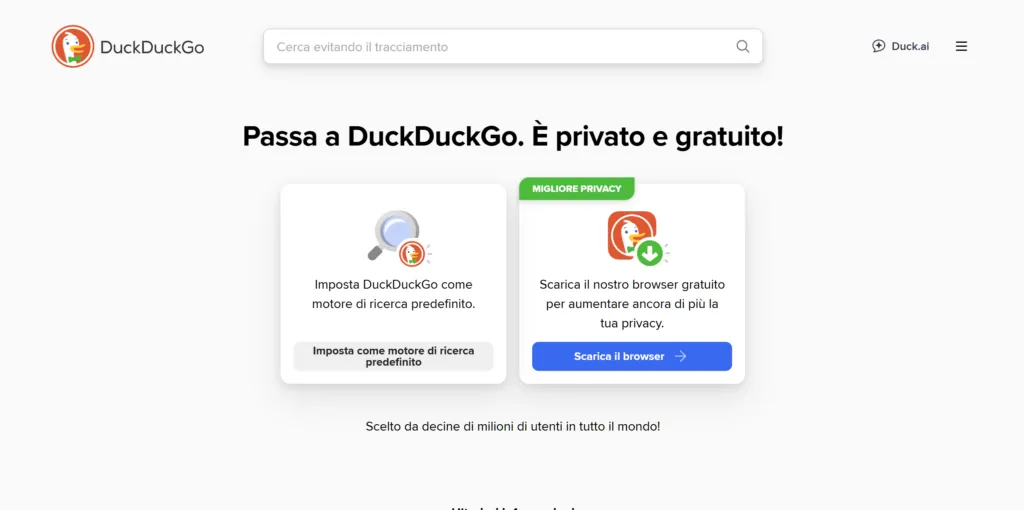
DuckDuck, for those who prioritize privacy, it is placed as an alternative that does not collect user data, ensuring identical search results for all. With a global market share of 0.58% and 2.2% in the United States (November 2022), it saw a steady growth thanks to the growing concern for privacy. However, recent data indicates a stabilisation or a slight decline in daily research.
Ask.com, known for its approach based on questions and answers, allows users to preview web pages. It is a subsidiary of InterActiveCorp (IAC).

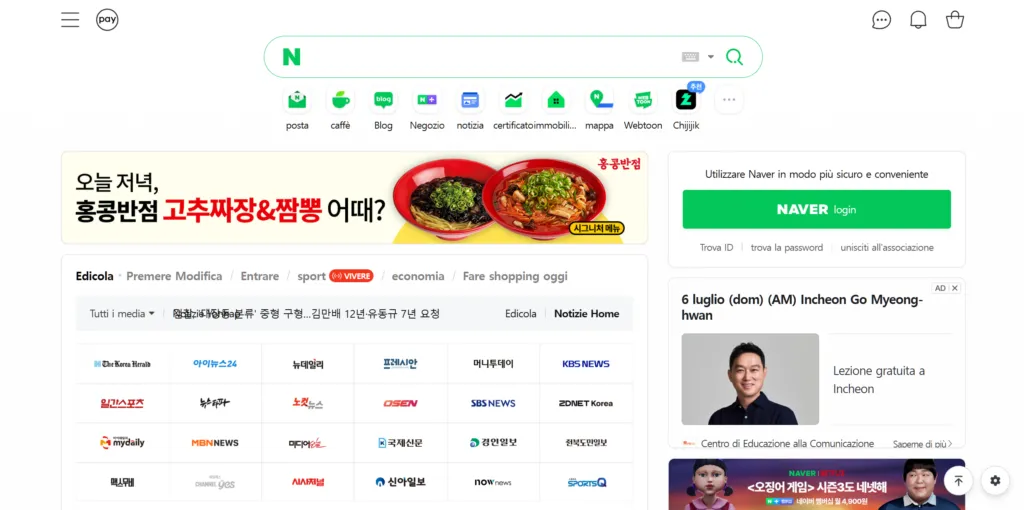
Naver, often referred to as “the Google of South Korea”, is an online platform that launched its search engine in 1999, offering comprehensive and aggregate search capabilities on a single page.
The Future of Online Research
The evolution of research engines is closely linked to technological innovation, in particular toArtificial intelligence and increasing attention to privacy. Although Google maintains undisputed supremacy, alternatives are gaining ground by offering diverse user experiences and focusing on specific niches, such as data protection or integration with generative models. The next challenges will include the ability of these engines to balance monetization with user experience and privacy protection, elements that will determine the future balances of the industry.


